The moment a Nigerian driver converts their vehicle to Compressed Natural Gas, they immediately start celebrating fuel savings. And the savings are real CNG is 40–60% cheaper per kilometre than petrol, and experts including the Director-General of the Nigerian Institute of Transport Technology have confirmed that CNG vehicles save up to 70% in total running expenses. But here is the question that rarely gets a straight answer: how much does it cost to actually maintain a CNG vehicle in Nigeria every year?
We will cover every maintenance cost category, from routine servicing to mandatory cylinder inspections, filter replacements, regulator checks, and the occasional component replacement. We will give you realistic naira ranges for each item, build you a complete annual maintenance budget, and then stack it against what you would spend maintaining the same vehicle on petrol so you can see the full picture of what CNG ownership actually costs and saves. Let us get into it.
Why CNG Vehicles Cost Less to Maintain: The Engineering Reason
Before diving into specific costs, it helps to understand why CNG vehicles are fundamentally cheaper to maintain because this shapes every cost figure that follows.
CNG is a cleaner-burning fuel than petrol or diesel. When petrol combusts in an engine, it leaves behind carbon deposits, unburned hydrocarbons, and acidic combustion by-products that contaminate engine oil, coat piston rings, foul spark plugs, and accelerate wear on cylinder walls. This is why petrol vehicles require oil changes every 5,000–7,500 km and why spark plugs, oxygen sensors, and catalytic converters need frequent replacement.
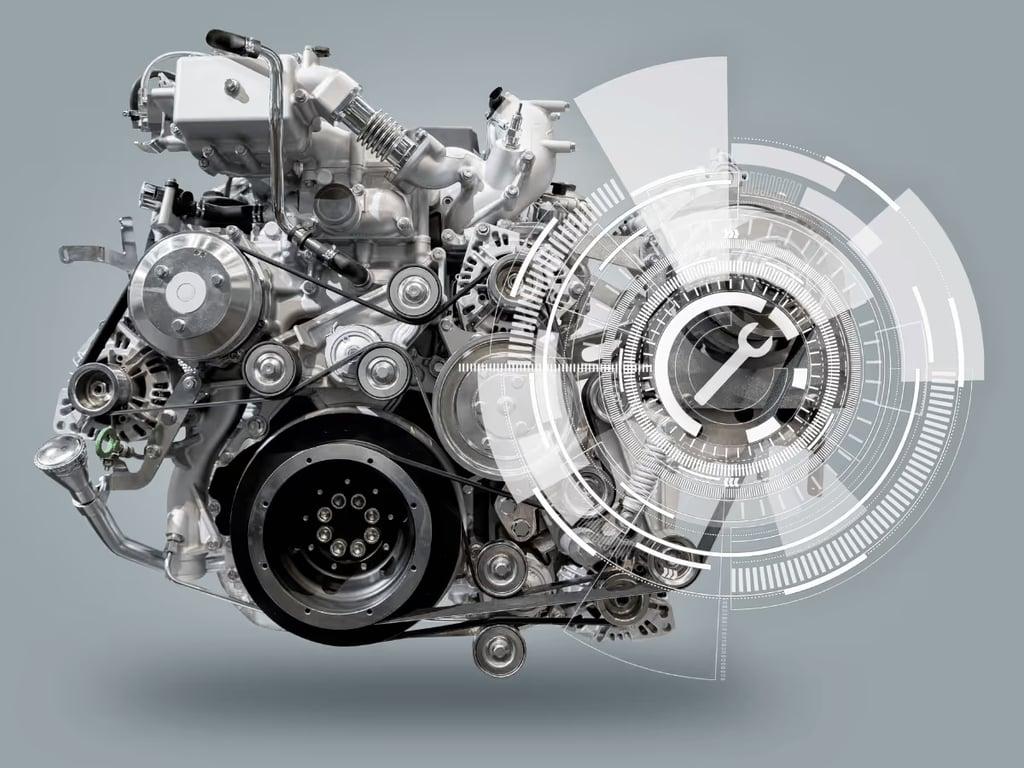
CNG combustion is significantly cleaner. Natural gas burns more completely, producing less carbon residue, lower acidic contamination in engine oil, and fewer deposits on combustion chamber surfaces. The practical result is that engine oil stays cleaner for longer, spark plugs last longer, engine components wear more slowly, and oil change intervals can be extended.

Image from ACUA
According to Mr. Oseni Suleiman, National President of the Amalgamated Union of Motor Mechanics and Technicians (AUOMMATON), "CNG burns more cleanly than petrol, reducing wear and tear on engine components and its combustion produces significantly lower emissions." This is not marketing language it is an engineering reality that directly reduces your annual maintenance expenditure.
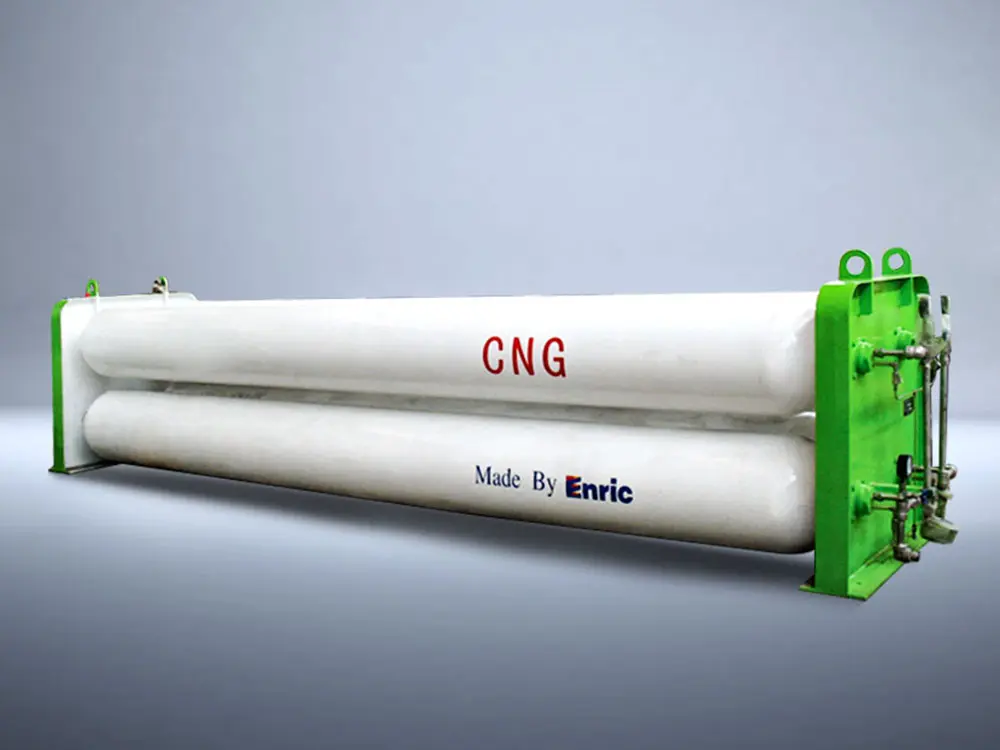
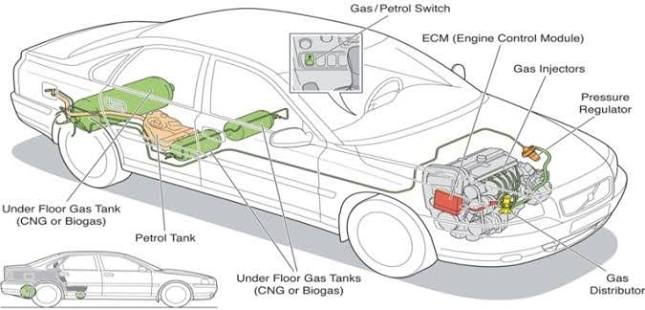
However and this is the part most articles skip a CNG-converted vehicle has an additional fuel system layered onto the original engine. That CNG system has its own maintenance requirements: a gas filter that needs annual replacement, a pressure regulator that needs periodic inspection and eventual replacement, CNG injectors that need cleaning, solenoid valves that need testing, and a high-pressure cylinder that requires mandatory hydrostatic testing every 3–5 years. These are costs unique to CNG vehicles that petrol cars do not have.
A complete and honest CNG maintenance budget must account for both the savings on engine maintenance AND the new costs of maintaining the CNG system itself. This guide covers both.
The Complete Annual CNG Maintenance Cost Breakdown (Nigeria, 2025–2026)
The following costs are based on current Nigerian market rates at certified CNG workshops, Pi-CNG-certified conversion centres, and general automotive service outlets. Costs vary by city, vehicle type, and workshop quality ranges reflect this variation.
1. Routine Engine Oil Change
CNG burns cleaner than petrol, which means engine oil degrades more slowly. Most certified CNG technicians recommend oil changes every 7,500–10,000 km for CNG vehicles, compared to 5,000–7,500 km for petrol vehicles. For a driver covering 60–80 km per day in a Nigerian city, this works out to 2–3 oil changes per year instead of 3–4.
Item | Cost Per Service | Annual Cost (2–3 services) |
|---|---|---|
Engine oil (4–5 litres, semi-synthetic) | ₦8,000–₦15,000 | ₦16,000–₦45,000 |
Oil filter replacement | ₦2,000–₦4,000 | ₦4,000–₦12,000 |
Labour (oil & filter change) | ₦3,000–₦6,000 | ₦6,000–₦18,000 |
Engine Oil Subtotal (Annual) | — | ₦26,000–₦75,000 |
2. CNG Gas Filter Replacement
The CNG gas filter is one of the most critical and most neglected maintenance items on a converted vehicle. Its job is to trap moisture, particulates, and contaminants from the CNG supply before they reach the pressure regulator and injectors. A clogged or saturated filter causes poor gas flow, rough idling, reduced power on CNG, and can damage the regulator over time.
Standard recommendation: replace every 12 months or 15,000 km, whichever comes first. In Nigeria, where CNG station quality can vary, erring toward annual replacement regardless of mileage is the safer and cheaper choice.
Item | Cost | Frequency |
|---|---|---|
CNG gas filter (part) | ₦3,500–₦8,000 | Once per year |
Labour (filter replacement) | ₦2,000–₦4,000 | Once per year |
Gas Filter Subtotal (Annual) | ₦5,500–₦12,000 per year |
3. CNG Pressure Regulator Service
The pressure regulator is the component that steps down high-pressure CNG from the cylinder (200–250 bar) to engine-usable pressure (1–2 bar). It also uses engine coolant to warm the expanding gas. Over time, the regulator's internal diaphragms, seals, and valves experience wear from the pressure cycling that happens thousands of times per driving session.
Regulator service which includes inspection, cleaning, and seal replacement is recommended every 20,000–25,000 km or every 18 months, whichever comes first. Full regulator replacement is typically needed every 3–5 years depending on usage intensity and kit brand.
Item | Cost | Frequency |
|---|---|---|
Regulator inspection & cleaning | ₦5,000–₦10,000 | Every 18–24 months |
Regulator seal/diaphragm replacement | ₦8,000–₦18,000 | Every 2–3 years |
Full regulator replacement (if needed) | ₦35,000–₦80,000 | Every 4–5 years |
Regulator Subtotal (Annualised) | ₦8,000–₦22,000/year (averaged) |
4. CNG Injector Cleaning and Service (Sequential Systems)
Vehicles with sequential CNG injection systems have dedicated CNG injectors that need periodic cleaning to maintain optimal spray patterns and fuel delivery accuracy. Dirty injectors cause rough engine operation on CNG, reduced fuel economy, and increased emissions.
Injector cleaning is typically done every 20,000–30,000 km using ultrasonic cleaning equipment at a specialist CNG workshop. In Nigerian conditions where CNG station supply quality is still variable many technicians recommend 15,000-km intervals.
Item | Cost | Frequency |
|---|---|---|
CNG injector cleaning (all injectors) | ₦8,000–₦20,000 | Every 15,000–25,000 km |
CNG injector replacement (per unit, if faulty) | ₦12,000–₦30,000 each | As needed |
Injector Service Subtotal (Annualised) | ₦6,000–₦16,000/year (averaged) |
5. Spark Plug Replacement
CNG burns at a higher combustion temperature than petrol, which can affect spark plug wear patterns. However, because CNG combustion is cleaner, spark plugs stay cleaner and last significantly longer than in petrol vehicles. While petrol vehicles typically replace spark plugs every 15,000–20,000 km, CNG vehicles can stretch to 25,000–40,000 km between replacements with premium spark plugs.
Item | Cost | Frequency |
|---|---|---|
Spark plugs (set of 4, standard) | ₦8,000–₦22,000 | Every 25,000–40,000 km |
Labour (spark plug replacement) | ₦3,000–₦6,000 | Same visit |
Spark Plug Subtotal (Annualised) | ₦5,500–₦14,000/year (averaged) |
6. Air Filter Replacement
The air filter on a CNG vehicle serves the same function as on any other vehicle keeping debris out of the engine intake. Because CNG combustion is cleaner, there is less internal contamination of the air filter from blowby gases. Standard replacement interval is 15,000–20,000 km or annually.
Item | Cost | Frequency |
|---|---|---|
Air filter (standard vehicle) | ₦3,500–₦9,000 | Annually / 15,000–20,000 km |
Air Filter Subtotal (Annual) | ₦3,500–₦9,000/year |
7. CNG Solenoid Valve Testing and Service
The solenoid valves which control CNG flow to and from the engine must open and close reliably tens of thousands of times over the vehicle's life. They are tested as part of an annual CNG system inspection. If a solenoid valve is sticking, leaking, or responding slowly, it should be replaced promptly as it is both a performance issue and a safety concern.
Item | Cost | Frequency |
|---|---|---|
Solenoid valve testing (part of system check) | Included in annual service | Annually |
Solenoid valve replacement (per valve, if faulty) | ₦8,000–₦20,000 each | As needed |
Solenoid Service Subtotal (Annualised) | ₦3,000–₦8,000/year (averaged — no fault assumption) |
8. Annual CNG System Inspection (Full System Check)
Every CNG vehicle should undergo a comprehensive system inspection at least once a year at a certified CNG workshop. This inspection covers every component of the gas system: cylinder integrity, high-pressure line condition, regulator performance, solenoid valve operation, ECU calibration, leak detection across all connections, and dashboard switch function.
In Nigeria, this annual inspection is also required for Pi-CNG-certified vehicles to maintain their FRSC certification status. A full system inspection at a certified centre typically takes 2–4 hours.
Item | Cost | Frequency |
|---|---|---|
Full CNG system inspection (certified centre) | ₦15,000–₦35,000 | Annually |
Annual Inspection Subtotal | ₦15,000–₦35,000/year |
9. Cylinder Hydrostatic Testing (3–5 Year Obligation)
Every CNG cylinder installed in a vehicle must undergo mandatory hydrostatic pressure testing to verify structural integrity. In Nigeria, aligned with international standards, this test is required every 3–5 years. The test fills the cylinder with water under controlled high pressure to check for deformation or micro-fractures not visible to the naked eye.
This is not optional. Operating a CNG vehicle with an untested, expired cylinder is illegal under FRSC and SON regulations, and voids any insurance coverage. Annualised across the testing cycle, cylinder testing adds a manageable and predictable cost.
Item | Cost | Frequency |
|---|---|---|
Cylinder hydrostatic test (per cylinder) | ₦25,000–₦60,000 | Every 3–5 years |
Cylinder replacement (end of life, 15–20 years) | ₦80,000–₦200,000 | Once per vehicle life |
Cylinder Testing Subtotal (Annualised) | ₦5,000–₦15,000/year (averaged over test cycle) |
10. CNG ECU Calibration Check
The CNG Electronic Control Unit (ECU) manages fuel delivery, fuel switching, and all electronic functions of the CNG system. Its calibration can drift over time, especially after major engine work, component replacement, or changes to the vehicle's original ECU parameters. An annual calibration check done via specialist software at a certified workshop ensures the CNG system is still delivering fuel optimally and that no fault codes are present.
Item | Cost | Frequency |
|---|---|---|
CNG ECU calibration check / recalibration | ₦8,000–₦20,000 | Annually or after major engine work |
ECU Calibration Subtotal (Annual) | ₦8,000–₦20,000/year |
Your Complete Annual CNG Maintenance Budget: The Summary Table
Pulling all the above together, here is the total annual maintenance cost picture for a standard CNG-converted passenger vehicle in Nigeria, driving approximately 20,000–25,000 km per year:
Maintenance Item | Low Estimate | High Estimate |
|---|---|---|
Engine oil & filter changes (2–3x/year) | ₦26,000 | ₦75,000 |
CNG gas filter replacement (annual) | ₦5,500 | ₦12,000 |
Pressure regulator service (annualised) | ₦8,000 | ₦22,000 |
CNG injector cleaning (annualised) | ₦6,000 | ₦16,000 |
Spark plug replacement (annualised) | ₦5,500 | ₦14,000 |
Air filter replacement (annual) | ₦3,500 | ₦9,000 |
Solenoid valve service (annualised) | ₦3,000 | ₦8,000 |
Annual full CNG system inspection | ₦15,000 | ₦35,000 |
Cylinder hydrostatic testing (annualised) | ₦5,000 | ₦15,000 |
CNG ECU calibration check (annual) | ₦8,000 | ₦20,000 |
TOTAL ANNUAL CNG MAINTENANCE COST | ₦85,500 | ₦226,000 |
For most private car owners in Nigerian cities driving 20,000–25,000 km annually, a realistic midpoint annual CNG maintenance budget is ₦120,000–₦150,000. Commercial drivers (taxis, ride-hailing) covering 40,000–60,000 km annually should budget at the higher end of the range or slightly above it.
CNG vs. Petrol: The Side-by-Side Annual Maintenance Comparison
Numbers only mean something when compared to the alternative. Here is how annual CNG maintenance costs stack up against the same vehicle maintained on petrol:
Maintenance Category | Petrol Vehicle (Annual) | CNG Vehicle (Annual) |
|---|---|---|
Engine oil & filter changes (3–4x/year) | ₦44,000–₦100,000 | ₦26,000–₦75,000 |
Spark plugs (more frequent) | ₦15,000–₦35,000 | ₦5,500–₦14,000 |
Air filter | ₦3,500–₦9,000 | ₦3,500–₦9,000 |
Fuel filter (petrol) | ₦5,000–₦12,000 | Replaced by CNG gas filter |
Throttle body / injector cleaning | ₦12,000–₦25,000 | Included in CNG system service |
Oxygen sensor / catalytic converter | ₦20,000–₦60,000 (every 2–3 yrs) | Less frequent due to cleaner combustion |
CNG-specific system maintenance | N/A | ₦50,000–₦120,000 |
TOTAL ANNUAL MAINTENANCE | ₦115,000–₦280,000 | ₦85,500–₦226,000 |
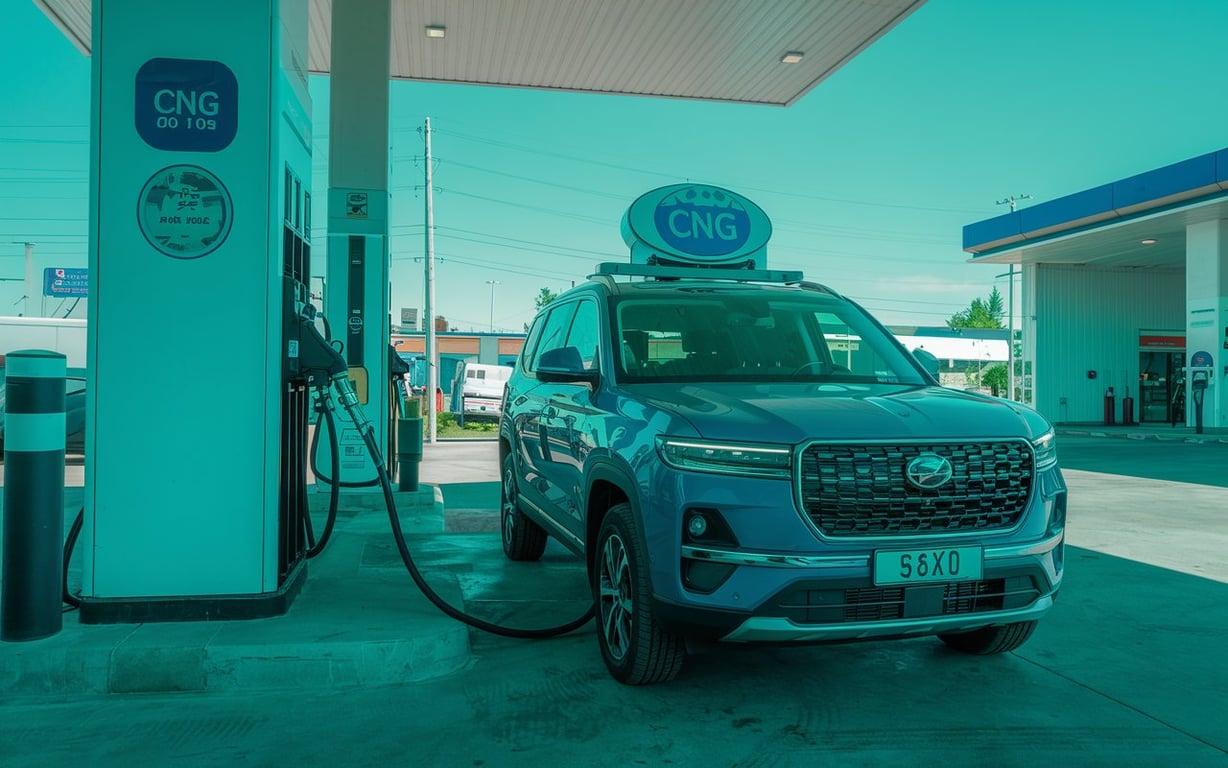
The maintenance savings from CNG are real but more modest than the fuel savings. The total annual maintenance saving over petrol is approximately ₦30,000–₦80,000 for a private car owner. When added to fuel savings of ₦800,000–₦1.5 million per year (for a private car covering 60 km daily), total annual running cost savings from CNG conversion comfortably exceed ₦1 million for most Nigerian drivers.

Image from Chasis
Your Annual CNG Maintenance Calendar: What to Do and When
The best way to control CNG maintenance costs is to follow a scheduled maintenance calendar rather than waiting for problems to appear. Here is a practical maintenance schedule for a Nigerian CNG vehicle owner:
Interval | What to Do | Estimated Cost |
|---|---|---|
Every 7,500–10,000 km | Engine oil & filter change | ₦13,000–₦25,000 per service |
Every 12 months | CNG gas filter replacement + full system inspection + ECU calibration check | ₦28,000–₦65,000 (combined visit) |
Every 15,000–20,000 km | Air filter + CNG injector cleaning | ₦11,500–₦29,000 |
Every 18–24 months | Pressure regulator inspection + seal check + solenoid valve function test | ₦13,000–₦30,000 |
Every 25,000–40,000 km | Spark plug replacement | ₦11,000–₦28,000 |
Every 3–5 years | Mandatory cylinder hydrostatic pressure test (legal requirement) | ₦25,000–₦60,000 |
Every 4–5 years | Full pressure regulator rebuild or replacement | ₦35,000–₦80,000 |
At 15–20 years | CNG cylinder replacement (end of certified service life) | ₦80,000–₦200,000 |
Pro tip: Plan your annual CNG system inspection to coincide with your vehicle's FRSC roadworthiness renewal. This way, any system issues are caught and resolved before certification, and you make a single workshop visit rather than two separate trips.
5 Practical Ways to Reduce Your Annual CNG Maintenance Cost
Use only certified CNG workshops. Pi-CNG-certified centres (379+ nationwide) employ technicians specifically trained in CNG system diagnostics and maintenance. A general mechanic unfamiliar with CNG systems may misdiagnose issues, use incompatible parts, or miss safety-critical checks all of which cost more to fix later. Visit pci.gov.ng to find your nearest certified centre.
Never skip the annual gas filter. At ₦5,500–₦12,000, the annual CNG gas filter is the cheapest item in this entire maintenance schedule and the one most often skipped. A blocked filter starves the system of gas flow, puts strain on the regulator, and causes poor performance that many owners attribute to the engine rather than the filter. Replace it every 12 months without exception.
Use the correct engine oil grade. CNG vehicles run at slightly higher combustion temperatures than petrol vehicles. Your engine oil must be rated to handle this consult your vehicle manufacturer's specification and confirm with your CNG workshop. Using the wrong viscosity grade in a CNG vehicle degrades engine protection and shortens oil change intervals, increasing annual cost.
Keep all maintenance records. A complete service record increases resale value significantly and is required for FRSC CNG recertification. It also protects your kit warranty most CNG kit warranties require documented servicing at certified intervals to remain valid.
Book the cylinder test well before the expiry date. Cylinder hydrostatic testing requires taking the vehicle to a certified testing facility, which may not be available in all cities. Book the test 2–3 months before the due date to avoid compliance gaps and to have time to address any issues discovered during testing.
Frequently Asked Questions: CNG Maintenance Costs in Nigeria
How much does a full CNG service cost in Nigeria?
A comprehensive annual CNG service covering system inspection, gas filter replacement, ECU calibration check, and leak testing typically costs ₦28,000–₦65,000 at a certified workshop, depending on the city and workshop. This does not include engine oil changes, which are billed separately.
Does CNG really reduce engine maintenance costs?
Yes, for several confirmed engineering reasons. CNG combustion produces less carbon residue, lower oil contamination, and less acidic engine environment than petrol. This extends oil change intervals from 5,000 km to 7,500–10,000 km, prolongs spark plug life from 15,000–20,000 km to 25,000–40,000 km, and reduces carbon fouling of intake valves and combustion chambers. The Nigerian Institute of Transport Technology and AUOMMATON have both confirmed that CNG vehicles save significantly on maintenance compared to petrol vehicles.
What is the most expensive CNG maintenance item?
For routine annual maintenance, the annual CNG system inspection (₦15,000–₦35,000) is the single largest line item. For periodic maintenance, the cylinder hydrostatic test (₦25,000–₦60,000 every 3–5 years) and full regulator replacement (₦35,000–₦80,000 every 4–5 years) are the largest costs. Cylinder replacement at end of life (₦80,000–₦200,000) is the largest single lifetime cost, but occurs only once every 15–20 years.
Can I maintain my CNG vehicle at a regular mechanic?
For standard engine maintenance oil changes, spark plugs, air filters any qualified mechanic can do the work. However, all CNG-specific maintenance (gas filter, regulator, injectors, ECU calibration, leak testing, cylinder inspection) must be done at a Pi-CNG-certified workshop by a trained CNG technician. This is both a safety requirement and a certification obligation. There are now 379+ certified centres across all 36 Nigerian states.
What happens if I skip CNG maintenance?
Skipping CNG maintenance has layered consequences. A neglected gas filter causes fuel starvation and regulator damage. An unchecked regulator can fail and deliver incorrect pressure to the engine. An uncalibrated ECU delivers incorrect fuel mixtures, causing poor performance and potential engine damage. An untested cylinder is both a legal violation and a genuine safety hazard. Beyond these specific risks, an unmaintained CNG system progressively degrades performance until the driver perceives no cost benefit at which point the CNG system is often blamed when the real cause is maintenance neglect.