Key Takeaways: Diesel to CNG Conversion in Nigeria
Diesel engines cannot run on 100% CNG — they require a dual-fuel system (CNG + diesel)
Dual-fuel conversion replaces 30–50% of diesel with CNG, reducing fuel costs significantly
When CNG runs out, the vehicle automatically reverts to diesel — no disruption
Government subsidies cover up to 50% of conversion cost for commercial operators
Payback period for heavy trucks: 3–6 months. For generators: 6–12 months
Use only Pi-CNG-certified centres — visit pci.gov.ng or use the MyCNG app
Every truck driver, bus operator, and diesel generator owner in Nigeria knows the arithmetic by heart: diesel costs more, runs out faster, and now sits above ₦1,400 per litre in most markets. For fleet managers and transporters, diesel is no longer just a running cost it is the single biggest threat to business survival. So when people hear about Compressed Natural Gas (CNG) cutting fuel costs by up to 60%, the question that follows is immediate and urgent: can a diesel engine actually run on CNG?
If you own a diesel-powered car, truck, bus, or generator and are trying to understand what your options truly are, this is the most thorough, Nigeria-specific guide you will find on the subject. We will explain the technical reason behind diesel's limitation, how dual-fuel conversion actually works, what it costs, what you stand to save, and who it makes most sense for in today's Nigerian market.
Why Diesel Engines Cannot Simply Be Converted to 100% CNG

To understand why diesel-to-CNG conversion is fundamentally different from petrol-to-CNG conversion, you need to understand one core engineering principle: how each engine type ignites its fuel.
A petrol engine uses spark ignition. A spark plug fires at precisely the right moment, igniting the air-fuel mixture inside the cylinder. This is why petrol engines can be cleanly converted to run on CNG. CNG ignites easily with a spark, just as petrol does. Swap the fuel, recalibrate the injectors, and the combustion principle remains unchanged.
A diesel engine, by contrast, uses compression ignition. There are no spark plugs. Instead, air inside the cylinder is compressed so intensely that it becomes extremely hot typically above 700°C and when diesel is injected into that superheated air, it ignites spontaneously. This process is what gives diesel engines their high torque and efficiency.
Here is the critical point: CNG's auto-ignition temperature is approximately 540°C. Diesel's is around 250°C. In a diesel engine's compression ignition environment, CNG by itself will not ignite reliably the timing and energy of combustion would be wrong, leading to misfires, power loss, and potential engine damage. This is why converting a diesel engine to run on 100% CNG would require replacing the entire combustion system essentially building a new engine.
Chinedu Oguegbu, Managing Director of OMAA Motors, explained this plainly to TheCable: "You can not just use CNG alone for diesel-powered vehicles because they do not use spark ignition engines. So, the way diesel ignites is like compression… you would probably be able to convert a diesel engine to use 50 percent diesel and 50 percent CNG."
This is the technical reality that most articles on the subject gloss over and understanding it is the foundation for making a smart decision about your diesel vehicle.
So What Is a Dual-Fuel Diesel-CNG System?
A dual-fuel CNG conversion is the engineered solution to the diesel ignition problem. Rather than replacing diesel as the fuel source, a dual-fuel kit introduces CNG into the engine's air intake, where it mixes with the incoming air before compression. Diesel is still injected as normal but now it ignites a leaner mixture of CNG and air, rather than air alone.
The diesel acts as the ignition "pilot" fuel. Its compression ignition characteristics are preserved, but because the combustion chamber now contains a mixture of CNG and air rather than pure air, far less diesel is needed to generate the same power output. The CNG carries a significant portion of the combustion energy typically replacing 30–50% of the diesel that would otherwise be consumed.
The result is a vehicle that still sounds, drives, and performs like a diesel because it is still partly diesel but burns dramatically less of it per kilometre. The engine sees no fundamental changes to its combustion system. The conversion is entirely in the fuel preparation and delivery stage.
What a Dual-Fuel Kit Contains
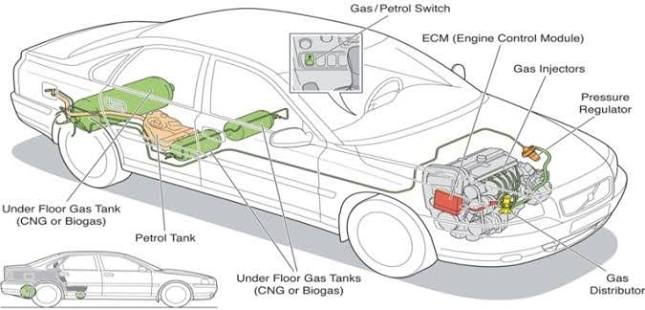
A professional dual-fuel diesel-CNG conversion kit typically includes the following components:
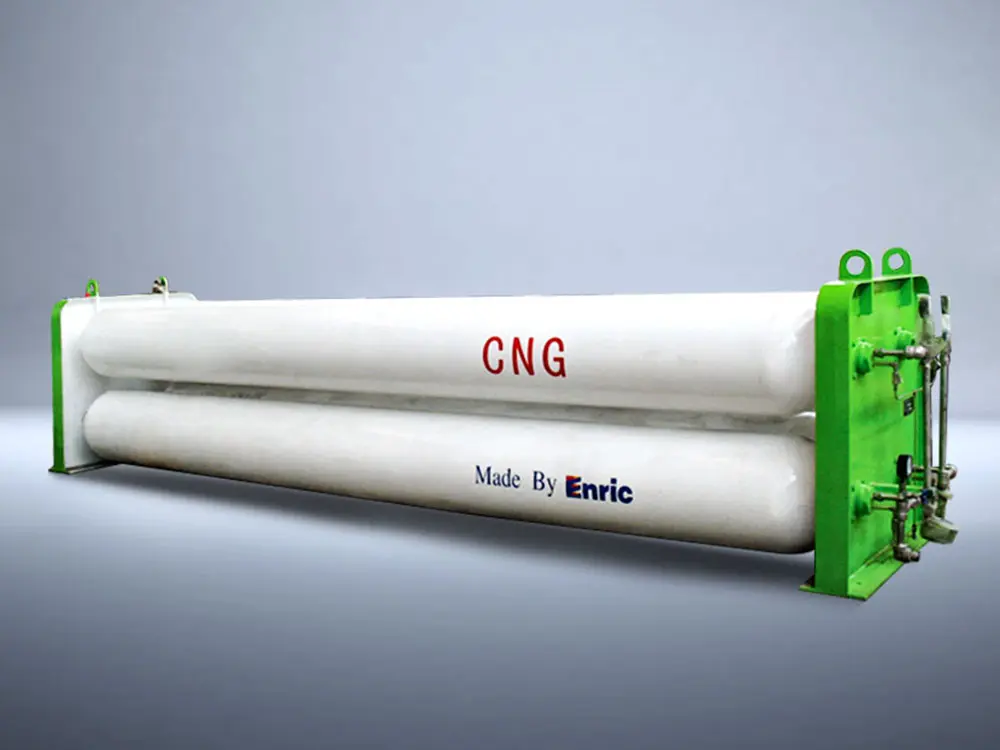
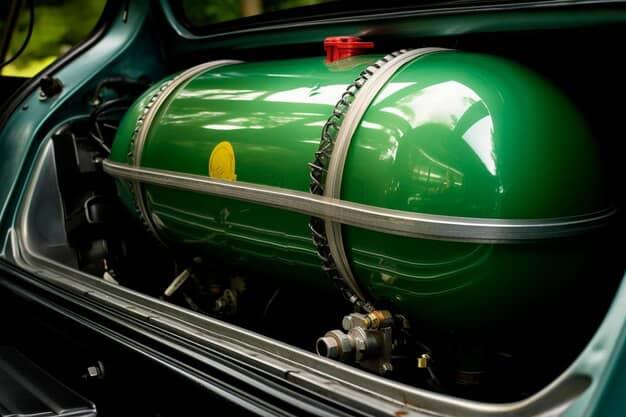
CNG Storage Cylinder: High-pressure tank (200–250 bar rated) installed in the vehicle's chassis, cab, or cargo area
Gas Pressure Regulator: Reduces high-pressure CNG to a safe working pressure for engine intake delivery
Gas Mixer / Gas Rail: Introduces metered CNG into the engine's air intake manifold ahead of turbocharger or intercooler
Dual-Fuel ECU (Controller): The intelligence unit that monitors engine load, speed, and diesel consumption in real time, and adjusts CNG substitution percentage accordingly
Diesel Reduction Valve: Works with the controller to reduce diesel injection volume proportionally as CNG is introduced
Solenoid Valves: Control gas flow automatically shutting off CNG if the engine stops, CNG pressure drops, or the system detects a fault
CNG Pressure Gauge / Dashboard Display: Shows the driver remaining CNG level and current operating mode
When properly installed by a certified technician, the dual-fuel system is seamless. The driver simply starts the engine normally. Once the engine reaches operating temperature, the CNG system activates automatically. If CNG runs out, the engine continues running on diesel without interruption.
How Much Can You Save? The Diesel vs. Dual-Fuel Numbers for Nigeria
The financial case is where diesel-to-CNG conversion becomes genuinely compelling especially for commercial operators. Let us look at real numbers based on current Nigerian fuel prices.
Cost Factor | Diesel Only | Dual-Fuel (CNG + Diesel) |
|---|---|---|
Diesel Price | ₦1,400/litre | ₦700–₦980/litre equiv. (with CNG substitution) |
Daily diesel spend (truck, 300 km/day) | ≈ ₦42,000–₦55,000 | ≈ ₦21,000–₦35,000 |
Monthly fuel cost | ≈ ₦1.26M–₦1.65M | ≈ ₦630,000–₦1.05M |
Monthly savings | — | ₦500,000–₦700,000 |
Annual savings | — | ₦6M–₦8.4M per truck |
Note: Estimates based on diesel at ₦1,400/litre, CNG at ₦380/SCM, 30–50% diesel substitution rate, and typical long-haul truck consumption. Actual savings depend on engine size, route, load, and kit quality.
For a commercial bus operator making the Lagos–Ibadan run daily, the numbers are similarly dramatic. A government testimonial captured by Pi-CNG & EV shows one transporter who went from spending ₦45,000 per day on fuel to approximately ₦14,000 per month total a reduction of more than 90% though that was a petrol vehicle. For diesel operators, realistic dual-fuel savings sit between 30–50%, which still translates to hundreds of thousands of naira per vehicle annually.
What Does Diesel-to-CNG Dual-Fuel Conversion Cost in Nigeria?
Dual-fuel conversions for diesel vehicles are more complex and therefore more expensive than standard petrol-to-CNG conversions. The exact cost depends on engine size, vehicle type, cylinder configuration, and the quality of the kit. Here are realistic market estimates:
Vehicle Type | Estimated Conversion Cost | Approx. Payback Period |
|---|---|---|
Diesel car / SUV | ₦600,000–₦900,000 | 8–14 months |
Commercial minibus / bus | ₦900,000–₦1.5M | 4–8 months |
Medium haulage truck | ₦1.5M–₦2.5M | 3–6 months |
Heavy-duty articulated truck | ₦2.5M–₦4M+ | 3–5 months |
Industrial diesel generator | ₦1.2M–₦3M (varies by KVA) | 6–12 months |
The higher the daily diesel consumption, the faster the payback. That is why heavy-duty long-haul trucks which might burn 100–150 litres of diesel daily often achieve the shortest payback periods despite having the highest conversion costs.
Government Support: How Nigeria Is Making Conversion More Affordable
Nigeria's Presidential Initiative on Compressed Natural Gas and Electric Vehicles (Pi-CNG & EV) formerly known as PCNGI has been the single most significant driver of CNG adoption in the country since its establishment in August 2023 under President Bola Tinubu's Renewed Hope Agenda.
As of mid-2026, the initiative has achieved the following milestones relevant to diesel vehicle operators:
100,000+ vehicles converted nationwide through the Conversion Incentive Programme (CIP)
379+ certified conversion centres operational across all 36 states
75+ CNG refuelling stations active across 20 states, with rapid expansion underway
7,700 CNG auto-technicians trained across all six geopolitical zones
50% conversion subsidy offered to commercial transporters (₦600,000–₦750,000 per vehicle)
CALM Fund financing at 9% interest available through the Bank of Industry for fleet operators who cannot afford upfront costs
The Northern CNG & EV Corridor inaugurated in Kano in May 2026 specifically serves commercial haulage operators a clear signal that the government recognises the diesel-truck conversion market as a priority. CNG is currently priced at ₦380 per Standard Cubic Metre (SCM), compared to diesel at ₦1,400+ per litre a price difference that makes the government's subsidy programme even more impactful for fleet operators.
To find a certified conversion centre near you, visit pci.gov.ng or download the MyCNG app, which provides real-time station availability across Nigeria.

Image from ResearchGate
Is Diesel-to-CNG Dual-Fuel Conversion Worth It? The Honest Assessment
With the technical picture clear, let us answer the most important question directly: is converting a diesel vehicle to dual-fuel CNG worth the investment in Nigeria today?
It Is Absolutely Worth It If You:
Operate a commercial truck, bus, or fleet vehicle that covers more than 200 km daily
Currently spend ₦30,000 or more per day on diesel fuel
Have access to CNG refuelling stations on your regular routes (Lagos, Abuja, Kano, Port Harcourt, Kaduna, Benin, and other major cities)
Plan to keep the vehicle in service for at least 2 years after conversion
Are eligible for the government's 50% conversion subsidy through your transport union
It Requires More Caution If You:
Regularly travel to remote areas with no CNG infrastructure — dual-fuel is still safe (you revert to diesel), but you lose most of the cost benefit
Have a diesel engine in poor condition — a pre-conversion engine overhaul may be needed, adding to upfront costs
Are using the vehicle for infrequent or low-mileage work — the payback period extends significantly below 100 km/day
The Verdict for Nigerian Diesel Operators
In a country where diesel costs have risen over 460% in three years, where the federal government is actively subsidising conversion costs, and where CNG is domestically produced and price-stable, the financial logic for diesel-to-CNG dual-fuel conversion is among the strongest investment cases available to any commercial vehicle operator in Nigeria today.
The critical caveat is: dual-fuel means dual-fuel. You will still need diesel. You will not eliminate diesel costs entirely you will reduce them by 30–50%. For a truck spending ₦1.5 million per month on diesel, that translates to ₦500,000–₦750,000 in monthly savings. Over a year, that is ₦6–₦9 million in recovered operating costs per truck. The investment pays for itself quickly, and every kilometre after that is profit recaptured.
What to Do Before Converting Your Diesel Vehicle: A Practical Checklist
Before you walk into a conversion centre, these steps will save you money and protect your engine:
Get a pre-conversion engine diagnostic. Any existing fuel system leaks, injector problems, or turbocharger wear must be addressed before the CNG system is installed. A flawed base engine will not perform well on dual-fuel and can void the kit warranty.
Confirm CNG availability on your route. Use the MyCNG app or pci.gov.ng to map refuelling stations along your regular routes before committing to conversion. The more stations available, the more CNG you can use, and the faster your payback.
Use only Pi-CNG-certified conversion centres. There are 379+ certified centres nationwide. Uncertified workshops using substandard kits are a serious safety hazard and will not qualify for government subsidies. Visit pci.gov.ng/conversion-centers for the full list.
Verify the kit brand and certification. Ask for SON certification documentation for the specific dual-fuel kit being installed. Reputable brands for heavy-duty diesel dual-fuel systems include Prins, BRC, and Lovato among others.
Apply for the government subsidy before paying full price. Commercial vehicle operators — particularly those under NURTW, RTEAN, or other registered transport unions — may qualify for up to 50% off the conversion cost. Contact the Pi-CNG & EV initiative through pci.gov.ng before spending a naira on conversion.
Ensure post-conversion FRSC certification. Your vehicle must be inspected and re-certified by the Federal Road Safety Corps (FRSC) after conversion. This is both a legal requirement and your insurance protection. Do not operate a converted vehicle without it.
Frequently Asked Questions: Diesel to CNG Conversion in Nigeria
Can a diesel engine run on 100% CNG?
No. Diesel engines use compression ignition, which requires diesel as the ignition pilot fuel. CNG alone cannot reliably ignite under diesel compression conditions. The correct solution is a dual-fuel system that uses CNG and diesel simultaneously, with CNG replacing 30–50% of the diesel normally consumed.
Does dual-fuel conversion affect engine performance?
When properly installed and calibrated, dual-fuel systems maintain the engine's original power and torque characteristics. The CNG controller manages substitution rates to ensure combustion quality is preserved at all engine speeds and loads. Poorly calibrated systems, however, can cause knocking or power reduction which is why certified installation matters enormously.
What happens when CNG runs out on a dual-fuel vehicle?
The dual-fuel ECU detects the CNG pressure drop and automatically switches the engine to run on 100% diesel. There is no interruption to driving. The vehicle simply reverts to its original diesel-only mode until CNG is refuelled. This safety-net feature makes dual-fuel systems particularly practical in Nigeria's current infrastructure landscape.
Can generators be converted to dual-fuel CNG?
Yes. Diesel generators whether for homes, offices, or industrial use are among the most cost-effective candidates for dual-fuel CNG conversion in Nigeria. Generators run at relatively constant engine speeds, which makes dual-fuel calibration simpler and substitution rates higher (sometimes up to 60–70%) compared to vehicles with variable road loads. With diesel powering generators at above ₦1,400 per litre, the return on investment for generator conversion can be achieved within 6–12 months.
Is diesel-to-CNG conversion safe?
A properly installed, SON-certified dual-fuel system on a diesel engine is safe. CNG has a higher ignition temperature than diesel (540°C vs. ~250°C), meaning it is harder to ignite accidentally. The dual-fuel system includes automatic shut-off valves, overpressure relief devices, and explosion-tested cylinders. The risks come exclusively from uncertified kits and unqualified installation both of which are avoidable by using Pi-CNG-certified centres.