Ask ten people what the difference between a dual-fuel and a bi-fuel CNG system is, and nine of them will either guess wrong or use the terms interchangeably. Even mechanics, transport managers, and online guides regularly confuse the two sometimes in the same paragraph. This is not just a vocabulary problem. Choosing the wrong system for your vehicle or generator can mean poor fuel efficiency, engine damage, or a costly reinstallation.
This guide cuts through the confusion once and for all. By the time you finish reading, you will be able to explain both technologies clearly, understand the components that make each one work, know which applications each is best suited for in the Nigerian context, and make an informed decision if you are considering converting your own vehicle, fleet, or generator.
The One-Sentence Difference That Changes Everything
Here is the clearest way to understand both systems before diving deeper:
Bi-Fuel CNG System: The engine runs on ONE fuel at a time — either CNG or petrol — and the driver switches between them using a dashboard button. Dual-Fuel CNG System: The engine runs on TWO fuels simultaneously — CNG and diesel burn together in the same combustion event, at the same time. |
That is the core distinction. One replaces, one supplements. Everything else the components, the applications, the savings, the limitations flows from that single engineering difference.
Bi-Fuel CNG Systems: How They Work
A bi-fuel CNG system is installed on petrol-powered vehicles cars, minibuses, taxis, and SUVs with spark-ignition engines. It gives the vehicle a second fuel capability without removing or disabling the original petrol system. Both fuel systems exist independently inside the same vehicle, each with its own tank, fuel lines, injectors, and electronic controller.
When the vehicle starts, it typically runs on petrol first especially in cold conditions and once the engine warms up, the driver can press the fuel selector switch on the dashboard to transfer fuel delivery to CNG. At that point, the petrol injectors stop firing, the petrol solenoid valve closes, the CNG solenoid opens, and CNG begins flowing from the cylinder through the pressure regulator to the CNG injectors. The engine combustion chemistry remains the same because CNG, like petrol, burns with a spark from the spark plug.
This switch happens in under a second and is completely transparent to the engine and driver. The engine continues running at the same power level, with the same throttle response and the same rpm. The only thing that changes is which fuel is being burned.

Image from ResearchGate
Key Components of a Bi-Fuel CNG System
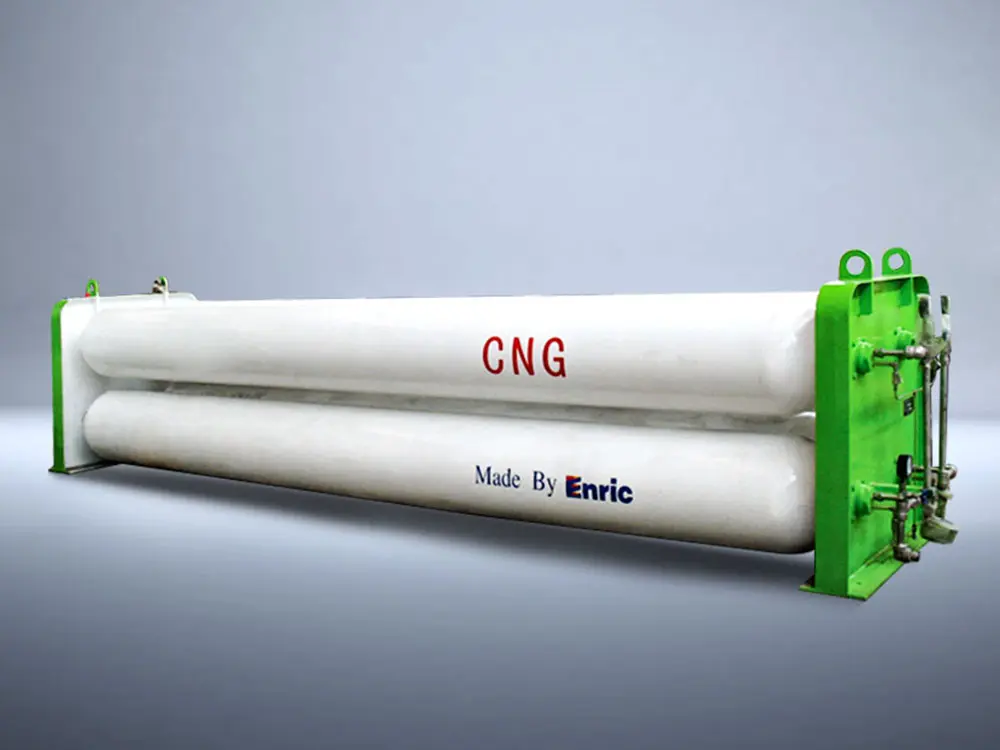
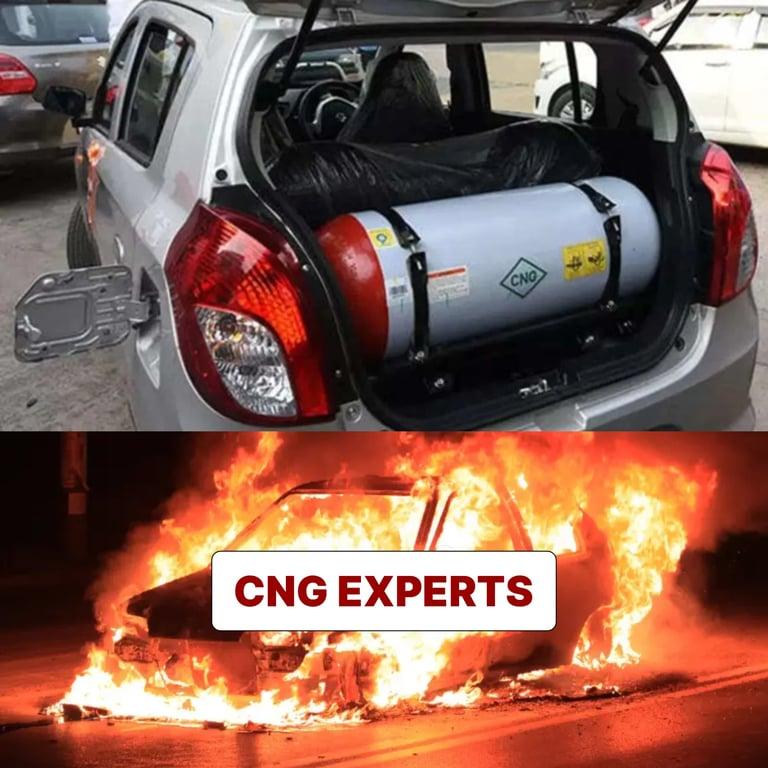
CNG Storage Cylinder: A high-pressure tank (200–250 bar) installed in the boot or undercarriage storing the compressed natural gas
High-Pressure Regulator: Reduces the cylinder pressure to engine-usable levels (typically 1–2 bar); also warms the expanding gas using engine coolant
CNG Injectors: In sequential systems, these deliver precisely timed pulses of CNG to each cylinder individually, mirroring how petrol injectors work
CNG Electronic Control Module (ECM): The dedicated computer that manages CNG delivery, communicates with the vehicle's original ECU, and handles fuel switching logic
Petrol Solenoid Valve: Electrically closes the petrol fuel line when the system switches to CNG mode
CNG Solenoid Valve: Opens to allow CNG flow when activated; closes automatically when the engine stops or switches to petrol
Fuel Selector Switch: Dashboard-mounted button that allows the driver to manually toggle between petrol and CNG modes
CNG Pressure Gauge: Feeds real-time tank level data to the dashboard switch display so the driver always knows remaining CNG range
Emulator: Sends artificial signals to the vehicle's original ECU to simulate petrol injector activity while running on CNG, preventing dashboard warning lights
What the Driver Experiences
From the driver's seat, a bi-fuel system is effortless. The vehicle starts on petrol as normal. When CNG is preferred which is most of the time, given the cost advantage the driver presses the switch. The engine continues without hesitation. The dashboard display shows the CNG tank level. When CNG runs low, the vehicle automatically reverts to petrol. The transition is seamless in both directions.
For Nigerian drivers, this automatic fallback to petrol is particularly valuable. As CNG infrastructure continues to expand under Pi-CNG & EV's programme currently 75+ stations across 20 states there are still routes and regions where CNG is not yet available. A bi-fuel system means you are never stranded.
Dual-Fuel CNG Systems: How They Work
A dual-fuel CNG system operates on a fundamentally different principle and it is designed for a different type of engine entirely. Dual-fuel systems are built for diesel engines, which use compression ignition rather than spark ignition. Because diesel ignites through the heat generated by extreme compression (not a spark), CNG alone cannot reliably trigger combustion in a diesel cylinder. The solution is to use both fuels together.
In a dual-fuel system, CNG is introduced into the engine's air intake before the air enters the cylinders. It mixes with the incoming air during the intake stroke. When diesel is then injected into the cylinder at the end of the compression stroke as it always would be it ignites spontaneously in the superheated compressed air, and that ignition event also burns the CNG-air mixture surrounding it. The diesel acts as the ignition trigger for the CNG. Both fuels combust simultaneously in the same cylinder event.
The dual-fuel ECU monitors engine speed, load, throttle position, and manifold pressure in real time, and adjusts the ratio of CNG introduced into the intake to ensure safe, efficient combustion at all operating conditions. Under light loads, the CNG substitution rate may be 30–40%. Under heavy loads at optimal conditions, the system can achieve 50–60% diesel substitution, meaning the engine burns half as much diesel as it would without the CNG system.

Image from Alternative Fuels
Key Components of a Dual-Fuel CNG System
CNG Storage Cylinder(s): Often larger-capacity tanks for heavy-duty vehicles; installed in the chassis, cab-mount, or cargo area depending on vehicle type
Pressure Regulator: Reduces high-pressure CNG to a safe, manageable pressure for intake delivery
Gas Mixer / Gas Rail: The device that introduces metered CNG into the engine's air intake stream ahead of the turbocharger or intercooler inlet
Dual-Fuel ECU (Controller): The core intelligence of the system; reads real-time engine data and continuously adjusts CNG flow to optimise the diesel-to-CNG substitution ratio
Diesel Reduction Interface: Works alongside the dual-fuel ECU to proportionally reduce diesel injection volume as CNG is introduced, preventing over-fuelling
Solenoid Shut-Off Valves: Safety valves that cut CNG flow instantly if the engine stops, a fault is detected, or CNG pressure drops below threshold
Pressure Gauges and Sensors: Monitor CNG system pressure and relay data to the ECU and driver display
Dashboard Display Unit: Shows current CNG level and system status; may include a manual override switch to disable CNG mode if required
What the Driver or Operator Experiences
In a dual-fuel system, there is no conscious fuel switching. The engine starts on diesel as normal. Once it reaches operating temperature, the dual-fuel ECU automatically begins introducing CNG into the air intake and simultaneously reducing diesel injection. The operator notices nothing except, over time, that the diesel tank empties more slowly.
If CNG runs out or the system detects a fault, it simply stops introducing gas and the engine reverts to running on 100% diesel again, seamlessly, without any interruption to operation. For truck drivers, bus operators, and generator managers, the dual-fuel system is largely invisible in daily operation. The evidence shows up in the fuel bills at the end of the month.
Bi-Fuel vs. Dual-Fuel CNG: The Complete Side-by-Side Comparison
Feature | Bi-Fuel CNG System | Dual-Fuel CNG System |
|---|---|---|
How fuels are used | One fuel at a time (CNG or petrol) | Both fuels burn simultaneously |
Engine type | Petrol / spark-ignition engines | Diesel / compression-ignition engines |
Primary CNG fuel role | Full replacement for petrol | Partial supplement to diesel (30–60%) |
Driver interaction | Manual switch on dashboard | Fully automatic — no driver input needed |
Diesel/petrol eliminated? | Yes — 100% CNG mode available | No — diesel always required for ignition |
Typical fuel cost saving | 40–60% on fuel cost (when using CNG) | 30–50% on diesel consumption |
Best suited for | Cars, taxis, SUVs, minibuses | Trucks, buses, generators, heavy machinery |
Fallback if CNG runs out | Automatic switch to petrol | Automatic revert to 100% diesel |
Conversion complexity | Moderate | Higher — requires ECU mapping to engine |
Typical conversion cost (Nigeria) | ₦300,000 – ₦900,000 | ₦900,000 – ₦4,000,000+ |
Emissions impact | Major reduction (full CNG mode) | Significant reduction (partial diesel replacement) |
Why These Two Systems Are So Frequently Confused
The confusion between bi-fuel and dual-fuel is widespread even in professional contexts for one key reason: both systems involve CNG and another fuel. Many websites and mechanics use the terms interchangeably, and in everyday conversation the distinction often gets lost.
The confusion is made worse by one specific scenario: bi-fuel vehicles running on 100% CNG do sometimes burn tiny residual traces of petrol from the lines. And dual-fuel generators are sometimes described as "bi-fuel" because they use two fuels. But these are edge-case descriptions, not engineering definitions.
The correct technical distinction is clear and consistent across international automotive and energy engineering standards: bi-fuel means sequential use of one fuel at a time; dual-fuel means simultaneous combustion of two fuels together. If you remember nothing else from this guide, remember that sentence.
Which System Is Right for Your Needs in Nigeria?
The right choice between bi-fuel and dual-fuel depends entirely on what you are driving or operating. Here is a practical breakdown for the Nigerian context:
Choose a Bi-Fuel CNG System If You Have:
A petrol-powered car, SUV, or taxi especially newer fuel-injected models (2000 and newer)
A ride-hailing or commercial taxi vehicle covering 80–200 km daily in Lagos, Abuja, Kano, or other cities with good CNG coverage
A petrol-powered minibus or shared transport vehicle (danfo, korope)
A vehicle you want to run on CNG as the primary fuel to cut costs by 40–60%
Regular access to CNG refuelling stations or want the safety of petrol as a backup
Choose a Dual-Fuel CNG System If You Have:
A diesel-powered truck, lorry, articulated vehicle, or long-haul transport
A commercial diesel bus or mass transit vehicle
A diesel generator powering a home, office, or industrial facility
A diesel-powered construction or agricultural machine
A vehicle or machine where eliminating diesel entirely is not possible, but reducing diesel spend by 30–50% would transform operating economics
A Note on Dedicated CNG Systems
Beyond bi-fuel and dual-fuel, there is a third category: dedicated CNG systems, where a vehicle is converted to run exclusively on CNG with the petrol system removed entirely. These offer the highest efficiency and lowest emissions but require consistent CNG access and are most common in corporate fleet vehicles operating on fixed urban routes. As Nigeria's CNG station network continues to expand now at 75+ stations and growing rapidly under the Pi-CNG & EV initiative dedicated systems are becoming increasingly viable for city-based fleets.
Real Savings: What Each System Means for Your Wallet in Nigeria
With CNG currently priced at ₦380 per Standard Cubic Metre versus petrol above ₦1,300 per litre and diesel above ₦1,400 per litre, the financial case for both systems is compelling. But the scale of savings differs significantly:
Scenario | Bi-Fuel (Petrol Car) | Dual-Fuel (Diesel Truck) |
|---|---|---|
Daily fuel spend (before) | ≈ ₦7,000–₦15,000 (petrol) | ≈ ₦42,000–₦60,000 (diesel) |
Daily fuel spend (after CNG) | ≈ ₦2,500–₦5,500 (CNG mode) | ≈ ₦25,000–₦38,000 (dual-fuel) |
Monthly saving | ≈ ₦120,000–₦280,000 | ≈ ₦420,000–₦660,000 |
Annual saving | ≈ ₦1.4M–₦3.4M | ≈ ₦5M–₦7.9M per truck |
Typical payback period | 8–18 months | 3–8 months |
Note: Estimates based on petrol at ₦1,300/litre, diesel at ₦1,400/litre, CNG at ₦380/SCM, and typical vehicle consumption patterns. Individual results vary by vehicle, route, and driving pattern.
Safety: Are Both Systems Equally Safe?
Both bi-fuel and dual-fuel CNG systems, when properly installed using certified components by trained technicians, are safe. CNG has an auto-ignition temperature of 540°C — nearly double that of petrol (280°C) and more than double that of diesel (250°C). It is lighter than air, meaning any gas leak disperses upward and dissipates rather than pooling on the ground like petrol or diesel vapour.
Every certified CNG system whether bi-fuel or dual-fuel includes automatic solenoid shut-off valves that close gas flow the moment the engine stops or a fault is detected, pressure relief devices on the cylinder that vent safely if pressure becomes excessive, and explosion-tested, internationally certified cylinders rated for 15–20 years of service.
In Nigeria, all CNG conversion kits must meet Standards Organisation of Nigeria (SON) certification, and all installations must be carried out at Pi-CNG-certified conversion centres. Post-conversion FRSC inspection and re-certification is mandatory. These requirements exist specifically to ensure that the safety standards of certified international CNG technology are maintained through every installation in the country.
Frequently Asked Questions
Can a petrol car use a dual-fuel CNG system?
No. Dual-fuel systems are designed specifically for diesel compression-ignition engines. Petrol engines use spark ignition and are converted using bi-fuel sequential systems instead. Using the wrong system type for your engine type will result in poor performance or engine damage.
Can a diesel truck use a bi-fuel CNG system?
Not in the conventional sense. A diesel truck cannot run on CNG alone (without a complete engine replacement), which is what a bi-fuel system enables. The correct solution for diesel engines is a dual-fuel system that uses both diesel and CNG simultaneously. Some sources use "bi-fuel" loosely to describe this dual-fuel arrangement but technically, a diesel truck that uses both fuels together is running a dual-fuel, not a bi-fuel, system.
Which system saves more money?
Both save significantly, but because diesel costs more per litre than petrol and diesel engines typically consume more fuel per kilometre, dual-fuel conversions on heavy trucks often yield higher absolute naira savings. In percentage terms, bi-fuel systems can achieve slightly higher savings (40–60% of fuel cost) because the vehicle can run on CNG exclusively, whereas dual-fuel systems only partially replace diesel (30–50% substitution rate).
Do both systems qualify for the government's conversion subsidy?
Nigeria's Pi-CNG & EV initiative offers conversion subsidies primarily to commercial road transport operators. Both bi-fuel (for commercial taxis, minibuses) and dual-fuel (for commercial trucks and buses) conversions may qualify depending on vehicle type and transport union affiliation. Visit pci.gov.ng or contact Pi-CNG & EV directly to confirm your eligibility and apply before paying full conversion costs.
Will either system affect my vehicle's warranty?
Factory-fitted CNG systems from vehicle manufacturers do not affect warranties. Aftermarket conversions may affect the warranty on engine and fuel system components if the manufacturer determines the conversion caused damage. Always use SON-certified kits and Pi-CNG-approved installers, and request a separate warranty on the CNG kit installation itself typically 12 months minimum for quality installations.