Every time you fill your tank, you feel the silent drain of money that fuels nothing but frustration. Petrol and diesel prices rise faster than most salaries, and for the millions of Nigerians, Indians, and vehicle owners worldwide who depend on their cars and commercial vehicles to earn a living, this is more than an inconvenience; it is a crisis.
The good news? There is a practical, proven, and increasingly affordable solution sitting right under your bonnet: Compressed Natural Gas (CNG). And the bridge between your current petrol car and a gas-powered future is a device called a CNG conversion kit.
This guide breaks down exactly what a CNG conversion kit is, the different types available, every component inside the kit and what it does, how to choose the right one for your vehicle, and what the installation process looks like from start to finish. Whether you drive a private saloon, a commercial Hiace bus, or manage a fleet of delivery trucks, this is the most complete CNG conversion kit resource you will find.
What Is a CNG Conversion Kit?
A CNG conversion kit is a complete system of engineered components that modifies a petrol or diesel vehicle so it can run on compressed natural gas. It does not replace your engine; it adapts your existing fuel system to accept CNG as an alternative or primary fuel source.
Most conversion kits sold today are bi-fuel systems, meaning your vehicle can run on either CNG or petrol. You switch between the two at the press of a button on your dashboard. This flexibility is particularly important in markets like Nigeria and other developing economies, where the CNG refueling station network is still expanding.
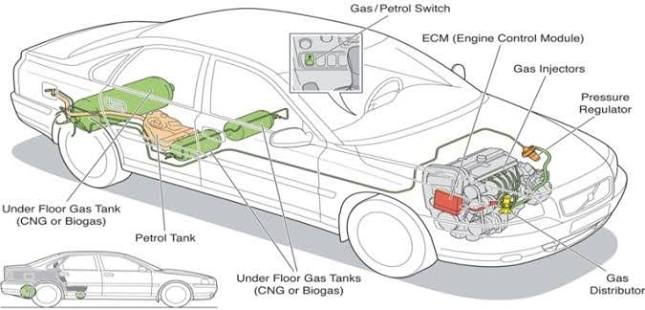
Once installed, the kit handles everything: safely storing the high-pressure gas, reducing it to engine-safe pressure, mixing it precisely with air, feeding it into the combustion chamber, and coordinating it all with your vehicle's existing electronic control systems. The result is a vehicle that drives the same way but runs far more cheaply and cleanly.
Types of CNG Conversion Kits: Which Category Does Your Vehicle Fall Into?
Not every CNG kit is the same, and choosing the wrong type for your vehicle is one of the most common and costly mistakes people make. There are three primary categories of CNG conversion kits, each designed for different engine types, use cases, and fuel flexibility needs.
1. Bi-Fuel CNG Conversion Kits (Most Popular for Private Cars)
Bi-fuel kits allow a vehicle to run on either CNG or petrol. The driver controls which fuel is active through a changeover switch installed on the dashboard. When CNG runs out, the vehicle automatically or manually switches to petrol, so you are never stranded.
This is the most widely used kit type for private vehicles and light commercial vehicles because it offers the best of both worlds: significant fuel savings when CNG is available, and the range security of petrol when it is not. For a car owner in Lagos, Abuja, Kano, or any city where CNG stations are being rapidly deployed, this is almost certainly the kit you want.
Best for: Personal cars, taxis, ride-hailing vehicles, light vans
Fuel flexibility: CNG + Petrol (switchable)
Engine type: Petrol (spark ignition) engines
2. Dedicated CNG Conversion Kits (Maximum Savings for Fleet Operators)
Dedicated CNG kits convert a vehicle to run exclusively on compressed natural gas. The petrol system is either bypassed or removed entirely. Because the engine is tuned purely for CNG, which has a higher octane rating than petrol, these systems deliver better performance, higher fuel efficiency, and the lowest possible fuel costs.
The trade-off is simple: you must have reliable, consistent access to CNG refueling infrastructure. Dedicated kits are common in government fleets, municipal bus services, and large logistics companies operating in areas with established CNG stations. If your operation runs set routes with known CNG stop points, this option offers the strongest return on investment.
Best for: Fleet vehicles, government buses, corporate transport
Fuel flexibility: CNG only
Savings potential: Highest of all three kit types
3. Dual-Fuel CNG Conversion Kits (For Heavy-Duty Diesel Vehicles)
Dual-fuel kits are specifically engineered for diesel engines in trucks, buses, and heavy machinery. Unlike bi-fuel kits, dual-fuel systems do not eliminate diesel; instead, they allow the engine to burn diesel and CNG simultaneously. The diesel acts as the ignition source (since diesel engines use compression ignition, not spark plugs), while CNG supplements it to reduce the proportion of diesel consumed.
The result is typically a 30–50% reduction in diesel consumption, depending on the engine and driving conditions, while maintaining full torque and load-carrying capacity. For long-haul truckers, generator operators, and heavy equipment fleets, this is a game-changing option.
Best for: Trucks, buses, generators, agricultural and industrial equipment
Fuel flexibility: Diesel + CNG (simultaneous)
Key benefit: Dramatic diesel savings without losing engine performance
Sequential CNG Kits: The Premium Standard for Modern Petrol Cars
Within the bi-fuel category, it is worth highlighting sequential CNG kits separately because they represent the current gold standard for modern vehicles. A sequential CNG kit uses individual injectors for each cylinder, just like a modern petrol injection system, rather than a single mixer in the intake manifold.
Why does this matter? Modern vehicles built after the mid-1990s use electronic fuel injection (EFI) systems managed by an ECU. A sequential CNG kit communicates directly with the ECU, adjusting injection timing and quantity per cylinder in real time. This produces cleaner combustion, better fuel economy, and far fewer engine warning lights or performance issues compared to older venturi (mixer-based) systems.
If your vehicle has a multi-point fuel injection (MPFI) petrol engine, which describes most cars built in the last 20 years, a sequential CNG kit is strongly recommended. The higher upfront cost is recovered quickly through better mileage and fewer post-installation problems.
CNG Kit Components: What Is Inside the Kit and What Each Part Does
Understanding the components of a CNG conversion kit is essential for two reasons: it helps you evaluate kit quality when purchasing, and it helps you maintain your system properly over its lifespan. Here is a complete breakdown of all major components in a standard CNG conversion kit.
1. CNG Cylinder (Storage Tank)
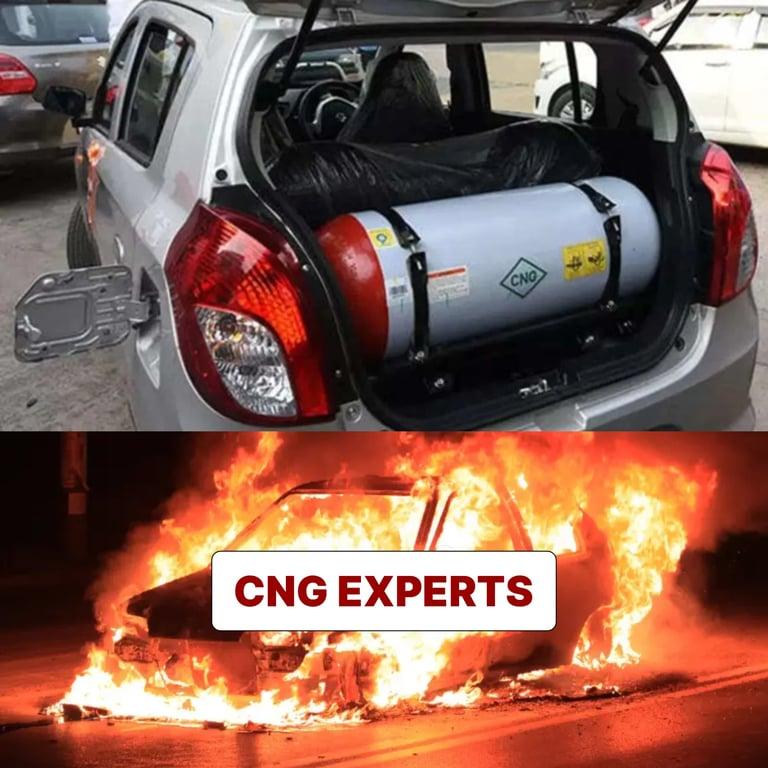
The CNG cylinder is the most visible and arguably most critical component of the entire system. It stores compressed natural gas at pressures typically between 200 and 250 bar (approximately 2,900 to 3,600 psi). The cylinder is permanently mounted in the vehicle, usually in the boot/trunk for cars, or under the chassis for buses and trucks.
Cylinders come in several types based on material construction: Type 1 (all-steel, heaviest but most affordable), Type 2 (steel with fibre overwrap), Type 3 (aluminium with full fibre wrap), and Type 4 (all-composite, lightest and most expensive). For most private car owners, Type 1 steel cylinders remain the standard. Cylinders must undergo periodic hydrostatic pressure testing, typically every 3 to 5 years, to certify they remain safe for use.

Image Source: CIMC ENRIC
2. Pressure Regulator (Reducer)
The pressure regulator is the component that makes the entire system possible. Gas exits the cylinder at 200+ bar, far too high for an engine to use safely. The regulator reduces this to the low working pressure the engine requires (typically 1–2 bar), doing so in stages to prevent pressure shock. Many regulators include a heating circuit because gas pressure drops cause temperature drops, which can cause the regulator to ice up in cold conditions. High-quality regulators maintain consistent output pressure regardless of how full or depleted the cylinder is.
3. Gas Injectors (for Sequential Kits)
In sequential CNG kits, each cylinder in the engine has its own dedicated gas injector, a solenoid valve that opens and closes rapidly to deliver precisely metered pulses of CNG into the intake port. The injectors are controlled by the CNG ECU and timed to match the engine's firing order. Injector quality is one of the key differentiators between budget and premium kits. Cheap injectors wear quickly, causing rough running and increased gas consumption over time.

Image Source: GasItaly
4. CNG ECU (Electronic Control Unit)
The CNG ECU is the brain of a sequential kit. It intercepts the signals from the petrol injectors, calculates the equivalent CNG injection quantity and timing, and controls the gas injectors accordingly. It also monitors system pressure, temperature, and engine parameters in real time to optimize performance. A good CNG ECU will be auto-calibrated during installation and can be recalibrated if the engine is modified or serviced. The emulator component within or alongside the ECU ensures the petrol ECU does not register fault codes when the system switches to CNG.
5. Air-Gas Mixer (for Venturi/Carburetor-Style Kits)
In older or simpler kit designs, particularly for carbureted engines or single-point injection systems, a mixer device is fitted in the air intake, creating a venturi effect that draws CNG into the airstream. While less precise than sequential injection, mixers remain a cost-effective solution for older vehicles and simpler engines such as those in three-wheelers (keke napepse/tuk-tuks) and older commercial buses.

Image from Glass Service
6. High-Pressure Tubing and Fittings
Stainless steel or reinforced high-pressure tubing connects the cylinder to the regulator. These lines must be rated to withstand cylinder pressure without failure. Fittings and connections are equally critical a single substandard fitting can cause a dangerous gas leak. Quality kits use compression fittings or flared connections, never simple push-fit or rubber hose connections for the high-pressure section.
7. Fill Point (Refuelling Receptacle)
The fill point is where your vehicle connects to the CNG pump at a filling station. It is typically mounted in the fuel filler area, near the original petrol cap, or on the exterior of the vehicle. The connection design is standardized (NGV1 or NGV2 nozzle standards) to ensure compatibility with CNG dispensing equipment. A check valve inside the fill point prevents backflow of gas from the cylinder when not refueling.
8. Changeover Switch
The changeover switch is mounted on the dashboard and gives the driver control over which fuel is active. In bi-fuel systems, it typically includes an LED fuel level indicator that shows how much CNG remains in the cylinder. Most modern switches initiate the switchover automatically when CNG pressure drops below a threshold, seamlessly transitioning to petrol without driver intervention. Some advanced systems include digital displays showing real-time CNG pressure and estimated range.
9. Solenoid Valves
Solenoid valves are electrically operated shut-off valves that control gas flow at critical points in the system, typically at the cylinder outlet and at the injection rail. When the engine is off, the solenoid valves close automatically, preventing any gas leakage. This is a primary safety feature: even if a downstream component develops a fault, the solenoid valve at the cylinder ensures gas cannot escape into the engine bay or vehicle interior.

Image Source: Comet Integrated
10. Filter
CNG from the filling station, while cleaner than petrol, can still carry trace particles, moisture, and compressor oil vapors that would damage injectors and the regulator over time. The filter typically installed between the cylinder and the regulator traps these contaminants before they reach sensitive components. Filter replacement is one of the most overlooked maintenance tasks; a clogged filter causes pressure drop, hard starting, and rough running.
11. Pressure Gauge and Temperature Sensor
A pressure gauge, often visible from the driver's seat or integrated into the changeover switch display, shows the current cylinder pressure. Since CNG pressure correlates directly with fuel quantity, this serves as the CNG fuel gauge. Temperature sensors monitor the gas temperature at various points, particularly at the regulator, and feed data to the ECU to allow for accurate fuel delivery calculations.
Quick Reference: CNG Kit Components at a Glance
Component | Primary Function | Key Quality Indicator |
|---|---|---|
CNG Cylinder | Stores compressed gas at 200–250 bar | Material type (steel vs composite), certification mark |
Pressure Regulator | Reduces pressure to engine-safe levels | Output consistency, integrated heating element |
Gas Injectors | Delivers metered CNG per cylinder (sequential) | Durability, response time, compatibility |
CNG ECU | Controls injection timing and fuel mapping | Auto-calibration, emulator quality |
Air-Gas Mixer | Mixes CNG with air (older/simpler kits) | Venturi design, material quality |
High-Pressure Tubing | Carries gas from the cylinder to the regulator | Pressure rating, fitting type |
Fill Point | Connects to the CNG pump at the filling station | NGV1/NGV2 standard compliance |
Changeover Switch | Controls fuel selection & shows CNG level | LED/digital display accuracy |
Solenoid Valves | Auto shut-off for safety | Response time, sealing quality |
Filter | Removes particles and moisture from gas | Filter media grade, replacement interval |
Pressure Gauge/Sensor | Monitors cylinder pressure and temperature | Calibration accuracy |
How to Choose the Right CNG Conversion Kit for Your Vehicle
Buying a CNG conversion kit is not a one-size-fits-all decision. The right kit depends on at least five factors: your engine type, your vehicle's use pattern, the CNG infrastructure in your area, your budget, and the certification standards in your country. Here is how to navigate each one.
Step 1: Know Your Engine Type
The single most important factor in kit selection is your engine type. Petrol engines use spark ignition and are compatible with bi-fuel kits. Diesel engines use compression ignition and require dual-fuel kits. Within petrol engines, carbureted engines use simpler venturi kits while electronic fuel injection (EFI) engines, which cover virtually all vehicles built after 1995, require sequential kits for optimal performance.
Installing a venturi-style kit on an EFI vehicle will work, but expect reduced fuel economy, potential ECU conflict codes, and uneven performance across the rev range. A sequential kit costs more but pays for itself.
Step 2: Assess Your Driving Pattern and Refueling Access
If you drive primarily within a city where CNG stations are available and growing, such as Lagos, Abuja, Port Harcourt in Nigeria; Delhi, Mumbai, Pune in India, a bi-fuel kit provides the best balance of savings and convenience. If you travel long intercity routes with limited CNG coverage, bi-fuel remains the safe choice. If you operate a depot-based fleet with your own CNG supply or fixed routes, a dedicated kit maximizes your savings.
Step 3: Verify Certification and Compliance
In Nigeria, CNG conversion kits and installation centers must meet standards set by the Standards Organisation of Nigeria (SON), and vehicles must pass FRSC re-inspection post-conversion. In India, kits must carry approval from ICAT or ARAI. Always purchase kits that carry the relevant national certification stamp. An uncertified kit may be cheaper upfront, but it can void your vehicle insurance, make your vehicle unroadworthy under the law, and most importantly, create serious safety risks.
Step 4: Evaluate Kit Quality, Not Just Kit Price
The CNG kit price range is wide. In Nigeria, complete bi-fuel kit packages (excluding installation) can range from approximately ₦150,000 to ₦400,000 depending on quality and brand. In India, kits range from roughly ₹15,000 to ₹60,000. The temptation to buy the cheapest available kit is understandable, but this is a pressurized gas system fitted to a moving vehicle — quality genuinely matters.
Evaluate kits on: the brand and origin of the pressure regulator, injector specification and durability ratings, ECU calibration capability, cylinder certification and wall thickness, and the supplier's track record in your market. Reputable international brands with strong local support networks include BRC, Landi Renzo, Lovato, Tartarini, and Tomasetto. Always ask whether the kit has been calibrated for your specific vehicle model.
Step 5: Factor In Total Cost of Ownership, Not Just Purchase Price
The total cost of CNG conversion includes the kit itself, installation labor, any required modifications, post-installation inspection and certification, and ongoing maintenance (filter replacements, hydrostatic cylinder testing, injector servicing). A complete installation for a private car in Nigeria typically runs between ₦300,000 and ₦500,000 all-in. Most vehicle owners in high-mileage use cases, such as taxis, ride-hailing, and commercial vehicles, recover this investment within 6 to 12 months through fuel savings alone.
What the CNG Kit Installation Process Looks Like
A professional CNG kit installation should always be performed by a certified technician at an approved workshop. Here is what the process involves, from inspection to road-ready certification.
Pre-Installation Inspection: The technician checks the vehicle's engine condition, fuel system integrity, and compatibility with the selected kit. Any existing engine faults must be resolved before conversion.
Cylinder Mounting: The CNG cylinder is mounted in the boot/undercarriage using a certified bracket system. Mounting position must not compromise structural safety or overload axle weight limits.
High-Pressure Line Routing: Stainless steel high-pressure tubing is routed from the cylinder through the vehicle body to the engine bay. All line routing must avoid heat sources, sharp edges, and pinch points.
Regulator and Component Installation: The pressure regulator, solenoid valves, injectors (sequential kits), or mixer (venturi kits), and filter are fitted in the engine bay and connected.
ECU Wiring and Integration: The CNG ECU is wired into the vehicle's existing electrical and fuel injection system. The changeover switch and fuel level display are fitted to the dashboard.
System Calibration: The CNG ECU is calibrated to the specific engine using diagnostic software. This step sets the precise injection map for optimal performance and fuel economy on your vehicle.
Leak Testing: Every connection is tested for leaks using gas detectors and pressure hold tests. No leaks are acceptable; the system must be 100% sealed before it is filled.
Initial Fill and Road Test: The cylinder is filled for the first time, and the vehicle is test-driven. Fine adjustments are made to the ECU calibration based on real-world performance data.
Certification: The vehicle is presented for re-inspection and certification at the relevant authority (FRSC in Nigeria, RTO in India). A certified vehicle is legally roadworthy and properly insured.
Why CNG Conversion Is Worth It: The Real Numbers
The case for CNG conversion is ultimately a financial one, though the environmental benefits are equally compelling. Here is what the economics look like in practice.
CNG is consistently priced significantly lower than petrol or diesel. In Nigeria, CNG has been available at subsidized prices well below petrol, representing savings of 50–70% per kilometer for high-mileage users. In India, CNG costs roughly half of petrol per equivalent energy unit. For a Lagos commercial driver covering 150–200 km daily, this translates to a fuel cost reduction that can exceed ₦100,000 per month.
Beyond fuel cost, CNG burns cleaner, meaning less carbon buildup in the engine, longer oil life, and lower maintenance costs over time. Engines running on CNG typically see extended oil change intervals and reduced wear on valves and piston rings. Fleet operators regularly report longer engine life on CNG-converted vehicles compared to petrol equivalents.
On the emissions side, CNG-powered vehicles produce approximately 25% less CO₂ than petrol, 75% less carbon monoxide, and virtually zero particulate matter. For cities grappling with worsening air quality, every CNG-converted vehicle is a meaningful contribution to cleaner air.
Frequently Asked Questions About CNG Conversion Kits
Can any petrol car be converted to CNG?
Most petrol-engined cars can be converted, but the compatibility depends on engine type, age, and condition. Vehicles with severely worn engines, cracked cylinder heads, or failing catalytic converters should address these issues before conversion. Your conversion center should conduct a thorough pre-inspection.
Does CNG conversion affect engine performance?
With a properly installed sequential CNG kit, performance impact is minimal, typically a 5–10% reduction in maximum power output because CNG has a lower energy density per volume than petrol. In everyday city driving, this difference is rarely noticeable. Fuel economy in terms of cost per kilometer, however, improves dramatically.
How long does a CNG cylinder last?
Type 1 steel cylinders are certified for a service life of 15–20 years, subject to passing periodic hydrostatic testing every 3–5 years. Composite cylinders (Types 3 and 4) typically have a shorter certified service life of 15 years. A cylinder that fails hydrostatic testing must be removed from service regardless of age.
What is the cost of a CNG kit in Nigeria?
Complete CNG conversion costs in Nigeria (kit plus installation) typically range from ₦300,000 to ₦500,000 for private cars and SUVs, ₦600,000 to ₦900,000 for commercial buses, and ₦180,000 to ₦250,000 for keke napeps (auto-rickshaws). Prices vary by city, kit brand, and workshop. The federal government's NGEP program has also offered subsidized conversion programs for commercial vehicle operators. Check with local NGEP offices for current schemes.
Will CNG conversion void my vehicle warranty?
For factory-fitted CNG systems, no. For aftermarket conversions, this depends on your vehicle manufacturer's policy and the jurisdiction you are in. In Nigeria and many other markets, conversion at an approved workshop using certified kits generally preserves your rights under local consumer protection frameworks, even if the original manufacturer's warranty does not explicitly cover it.